Here’s your first-year OpEx checklist—no fluff, no theory, just the categories, real numbers, and compliance notes you need to budget, track, and survive Year One. Built for US founders in 2026.
The Checklist: 12 Core OpEx Categories (With 2026 Dollar Ranges)
Use this as your master list. Adjust for your industry, location, and stage. All figures reflect Q1 2026 US small business data.
- Payroll & Benefits
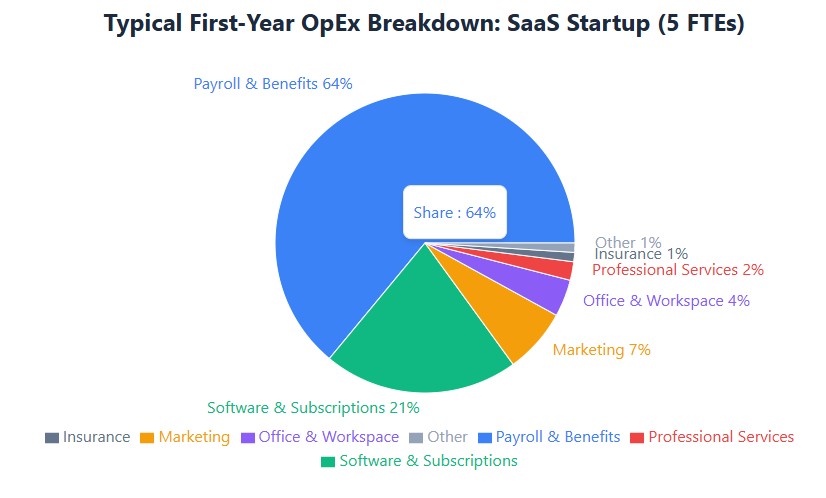
Typical range: $60k–$150k per FTE annually (salary + burden)
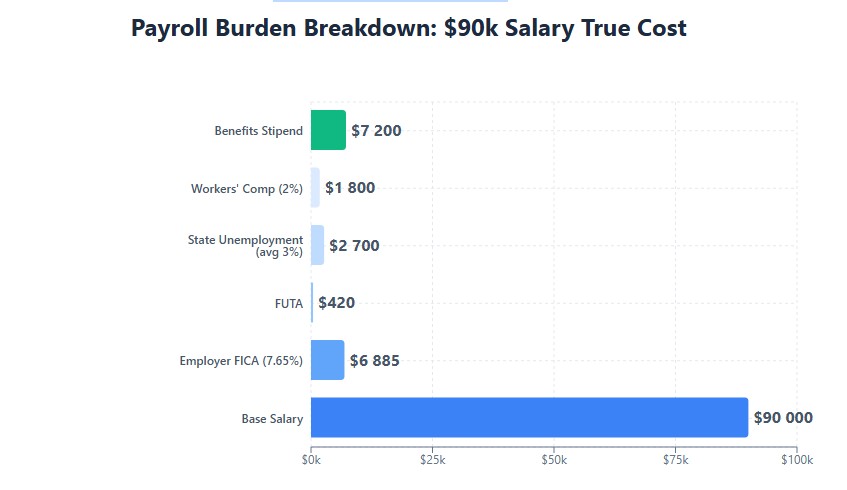
Includes: Base salary, employer FICA (7.65%), FUTA ($420 max on first $7k), state unemployment (0.31–6.34% depending on state), workers’ comp (1–4% of payroll), health insurance stipend ($300–$800/employee/month)
Compliance note: File Forms 941 (quarterly) and 940 (annual). Use Gusto, ADP, or Rippling to auto-calculate withholdings. Misclassifying employees as contractors risks back taxes + penalties. - Software & Subscriptions
Typical range: $200–$2,000/month for early-stage startups
Includes: Accounting (QuickBooks $50–$150/mo), communication (Slack $8/user/mo), project management (Asana $11/user/mo), CRM (HubSpot free–$50/mo), cloud hosting (AWS $100–$1k/mo)
Compliance note: Most SaaS subscriptions are fully deductible as OpEx. Keep invoices. If software is custom-built for your product, IRC §174 may require capitalization—consult a CPA. - Professional Services
Typical range: $3k–$15k Year One
Includes: Legal incorporation ($500–$2k), IP/trademark filing ($250–$1k/class), accounting setup ($1k–$3k), fractional CFO ($200–$400/hr, ~$5k/year retainer)
Compliance note: Legal fees for formation are capitalized under IRC §195 but amortizable. R&D-related legal work may qualify for credits—track time by project. - Office & Workspace
Typical range: $0 (fully remote) to $4k/month (small urban office)
Includes: Rent ($80–$120/sq ft annually in major metros), utilities ($1.50–$2.50/sq ft/mo), coworking ($300–$800/person/mo), home office deduction ($5/sq ft simplified method)
Compliance note: Home office deduction requires exclusive, regular business use. Document square footage and business %. Remote employees: consider stipends for internet/equipment—deductible if policy is written and consistent. - Marketing & Customer Acquisition
Typical range: 10–50% of projected revenue (highly model-dependent)
Includes: Paid ads (Google/Meta $500–$5k/mo starter), content creation ($1k–$10k/project), SEO tools ($100–$300/mo), PR retainers ($2k–$10k/mo)
Compliance note: Advertising is generally fully deductible. Track CAC and LTV. For DTC brands spending 40%+ on marketing, document unit economics—investors will ask. - Payment Processing & Transaction Fees
Typical range: 2.9% + $0.30 per transaction (Stripe, PayPal)
Includes: Credit card fees, ACH fees, marketplace commissions (Shopify 2%, Amazon 8–15%), fraud protection tools
Compliance note: These are deductible COGS or OpEx depending on your model. Keep processor reports. For high-volume businesses, negotiate custom rates—savings compound. - Insurance Premiums
Typical range: $1k–$10k/year depending on coverage
Includes: General liability ($500–$1.5k/yr), cyber liability ($1k–$3k/yr), E&O/professional liability ($500–$2k/mo for tech), workers’ comp (required in most states)
Compliance note: Workers’ comp is mandatory in all states except Texas. Short-term disability required in CA, HI, NJ, NY, RI. Keep certificates of insurance on file. - Travel & Client Entertainment
Typical range: $500–$5k/year for early-stage founders
Includes: Flights, hotels, client meals (50% deductible), conference tickets, mileage ($0.67/mile IRS standard rate in 2026)
Compliance note: Document business purpose, attendees, and receipts for meals. Mileage logs require date, destination, and purpose. Entertainment (e.g., tickets, clubs) is no longer deductible post-TCJA. - Equipment & Hardware
Typical range: $1k–$10k Year One
Includes: Laptops ($1.5k–$3k/unit), monitors, peripherals, lab equipment, servers
Compliance note: Assets over $2,500 generally must be depreciated. Section 179 allows immediate expensing up to $1.22M in 2026 for qualifying equipment. Keep purchase records and serial numbers. - Legal & Compliance Filings
Typical range: $500–$3k/year
Includes: State franchise taxes (DE $400 min, CA $800 LLC tax), registered agent fees ($100–$300/yr), business license renewals, sales tax registration
Compliance note: Nexus triggers vary by state. Selling $100k+ or 200+ transactions into a state may create sales tax obligations. Use Avalara or TaxJar to monitor thresholds. - R&D and Product Development
Typical range: Highly variable; $10k–$100k+ for technical startups
Includes: Developer contractor fees, prototyping materials, testing tools, third-party APIs
Compliance note: IRC §174 requires capitalization and 5-year amortization of software R&E costs for tax years after 2021. However, the R&D tax credit (Form 6765) remains available. Track qualified wages, supplies, and contract research separately. - Contingency & Buffer
Typical range: 10–15% of total projected OpEx
Includes: Unplanned legal fees, SaaS price hikes, delayed revenue, emergency repairs
Compliance note: Not a tax category—but critical for runway modeling. Treat as a separate budget line, not a catch-all for misc. expenses.
Real Startup Budgets: What Year One Actually Costs (2026)
Three real-world examples. Adjust for your team size, location, and model.
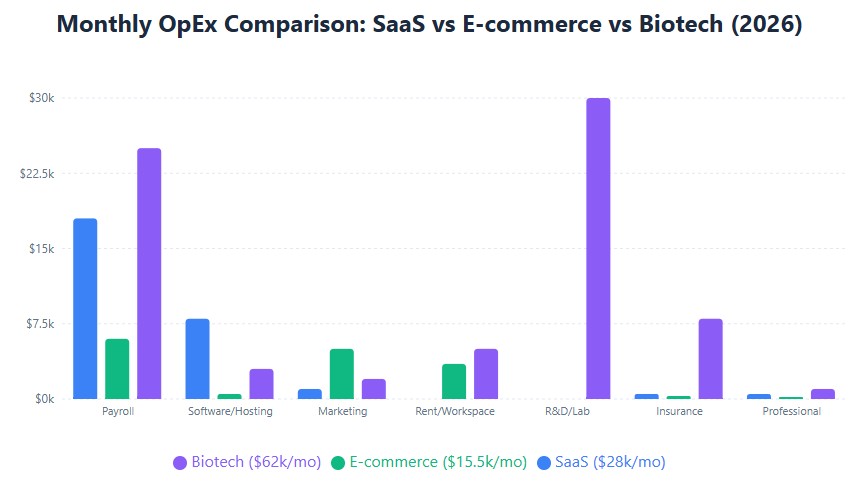
| Startup Type | Team | Monthly OpEx | Top 3 Cost Drivers | State Compliance Notes |
|---|---|---|---|---|
| SaaS (B2B) | 5 FTEs, remote | $28,000 | Payroll ($18k), software subs ($6k), cloud hosting ($2k) | DE incorporation + multi-state payroll withholding; IRC §174 amortization on dev costs; file Form 6765 for R&D credit |
| E-commerce (DTC) | 3 FTEs + contractors | $15,500 | Marketing ($5k), warehouse rent ($3.5k), payment processing ($2k) | TX: no state income tax, but monitor economic nexus for sales tax; marketplace facilitators may collect on your behalf |
| Biotech R&D Lab | 8 FTEs, seed stage | $62,000 | R&D expenses ($30k), lab insurance ($8k), equipment lease ($12k) | MA R&D credit eligible; OSHA compliance required; track qualified research expenses for Form 6765 |
Sources: IRS Pub. 535
5 Audit Triggers to Avoid in Year One
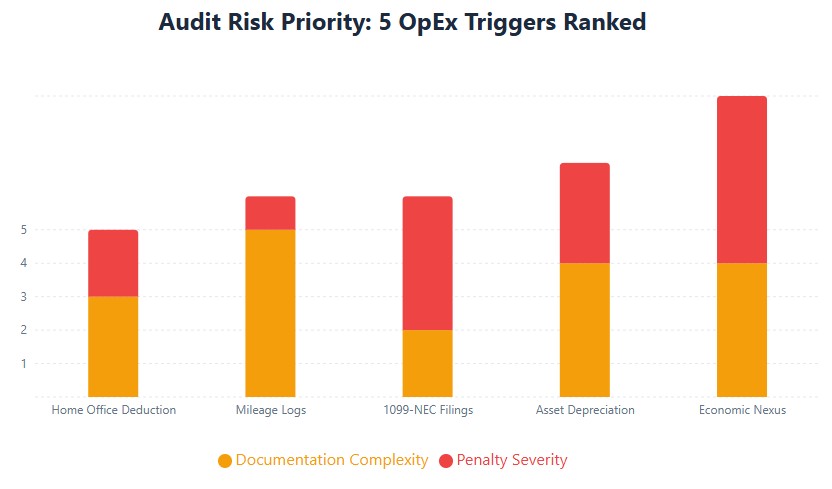
- Home office deduction that doesn’t add up
Claiming $10k in home office expenses on $40k revenue? The IRS looks for proportionality. Use the simplified method ($5/sq ft, max 300 sq ft = $1,500) if you lack detailed records. - Missing or inconsistent mileage logs
The 2026 IRS standard rate is $0.67/mile—but you need dates, destinations, and business purpose. Use apps like MileIQ or Everlance to auto-track. - 1099-NEC filings late or incomplete
Paid a contractor $600+? You must file Form 1099-NEC by January 31. Missing filings start at 2% penalty per form. Use QuickBooks, Rippling, or Tax1099 to automate. - Expensing assets that should be depreciated
Bought a $3,000 laptop? Generally must be depreciated over 5 years. Exception: Section 179 or de minimis safe harbor (up to $2,500/item with written accounting policy). Document your election. - Unreported sales tax from economic nexus
Sold $120k into Colorado? You likely owe sales tax—even if based in Delaware. Thresholds vary: $100k (CO), $500k (FL). Use the Streamlined Sales Tax Governing Board to check obligations.
Quick Decisions: Lease vs. Buy, SaaS vs. Build
Two high-impact choices. Here’s how to decide—with 2026 tax rules baked in.
Lease or Buy Equipment?
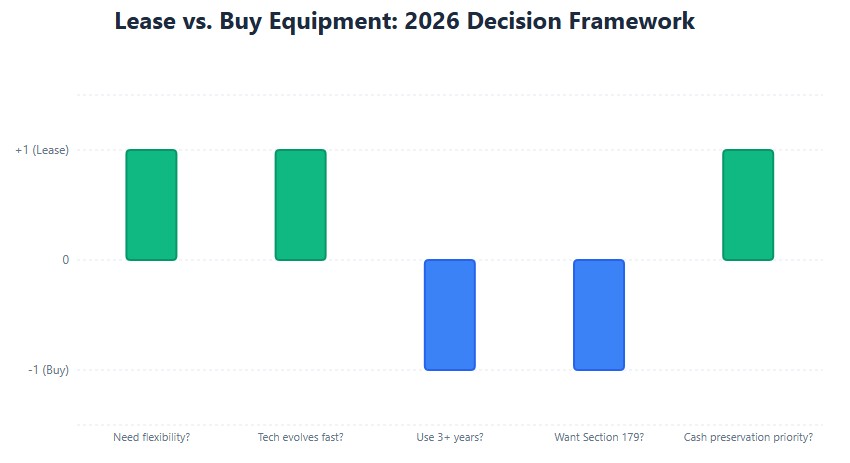
- Lease if: You need flexibility, want to preserve cash, or tech evolves fast (e.g., servers, lab gear). Lease payments are fully deductible as OpEx.
- Buy if: You’ll use the asset 3+ years, want to claim Section 179 expensing (up to $1.22M in 2026), or need it as collateral.
- Tax tip: Section 179 lets you expense qualifying equipment immediately instead of depreciating. But it’s an election—you must file Form 4562. Consult a CPA before year-end.
Subscribe to SaaS or Build In-House?
- Subscribe if: Annual cost < $15k, the tool isn't core IP, or you need speed. Fully deductible as OpEx.
- Build if: The functionality is core to your product, you need custom control, or long-term cost is lower. But: development costs likely must be capitalized under IRC §174.
- Middle path: Outsource with a fixed-scope SOW. Track contractor time. May qualify for R&D credit if work meets IRS qualified research tests.
90-Day OpEx Setup Plan (Start Today)
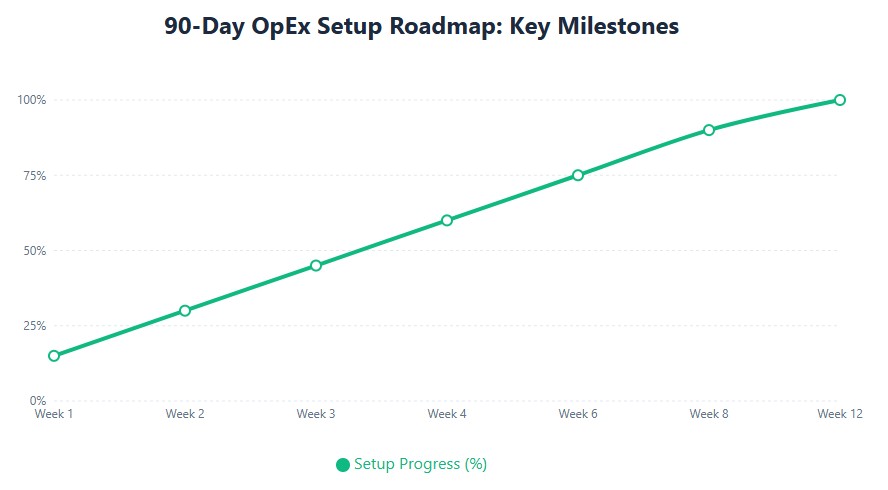
- Week 1: Get your EIN (free, instant at IRS.gov). Open a dedicated business bank account (Mercury, Brex, or local). Never commingle personal and business funds.
- Week 2: Register with your state’s Department of Revenue for withholding and sales tax. Check nexus obligations in any state where you have customers or contractors.
- Week 3: Set up accounting software (QuickBooks Online, Xero). Create a chart of accounts aligned with IRS categories and your NAICS code.
- Week 4: Implement expense tracking: require receipts over $25, auto-flag non-deductible items, integrate with payroll (Gusto, ADP).
- Week 6: Review OpEx categories with a CPA. Confirm R&D credit eligibility, validate accounting method (cash vs. accrual), set up estimated tax payments (Form 1040-ES).
- Week 8: Build a 12-month cash flow forecast. Include your 10–15% contingency line. Stress-test for 3-month revenue delay.
- Week 12: Document your OpEx policy in writing: what’s deductible, receipt rules, approval workflow. This is your audit defense.
Founder FAQs (2026 Answers)
Can I deduct my cell phone bill?
Yes—if primarily for business. Allocate 70–100% based on usage logs. Keep records. If the phone is also personal, document the business %.
Are pre-revenue expenses deductible?
Yes. Startup costs up to $5,000 can be deducted immediately (phasing out after $50k total). R&D expenses may qualify for credits even with $0 revenue. Track everything from Day 1.
How much should I spend on marketing in Year One?
Typical range: 10–15% of revenue for B2B, 30–50% for DTC. But focus on CAC and LTV—not just the %. If CAC > LTV, pause and rethink.
Do I need a separate bank account?
Yes. Commingling funds risks “piercing the corporate veil”—losing liability protection. It’s a legal safeguard, not just accounting hygiene.
Can I claim the home office deduction if I also work from coffee shops?
Yes—if your home office is your “principal place of business” and used regularly/exclusively for work. Occasional offsite work doesn’t disqualify you.
One Last Thing
Your OpEx checklist isn’t a one-time task. Review it quarterly. Adjust for hiring, pricing changes, or new compliance rules. Document decisions. Keep receipts. When in doubt, ask a CPA—before you file.
Get this right, and you’ll have cleaner books, stronger investor trust, and more runway to grow. That’s the point.