Executive Summary
Business Name: The Executive Terminal
Location: South Loop / Lakeshore East, Chicago, IL (1,200 sq ft)
Concept: A premium, appointment-only men’s barbershop designed for time-starved finance, tech, and legal professionals. Focus on predictable timing, discreet service, and outcome-driven grooming.
Legal Structure: LLC (Electing S-Corp status in Year 2)
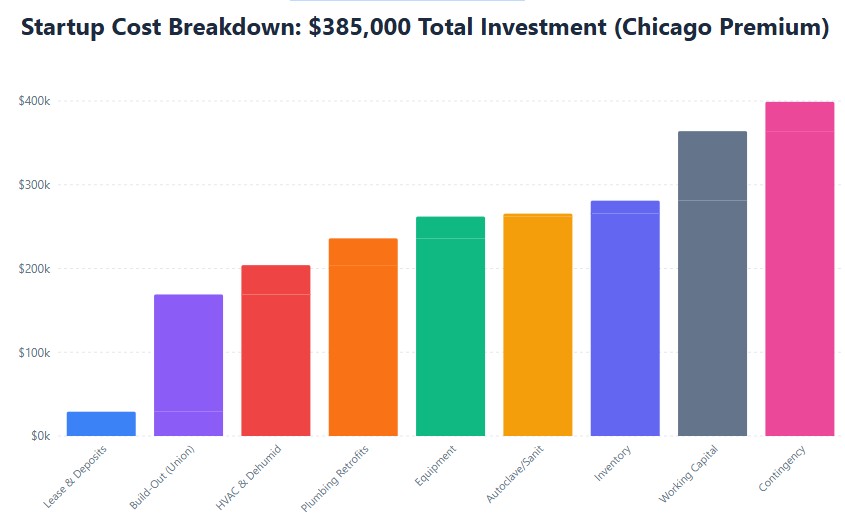
Startup Cost: $385,000 (reflecting Chicago-specific build-out and regulatory costs)
Funding Request: $150,000 SBA 7(a) loan + $235,000 owner equity
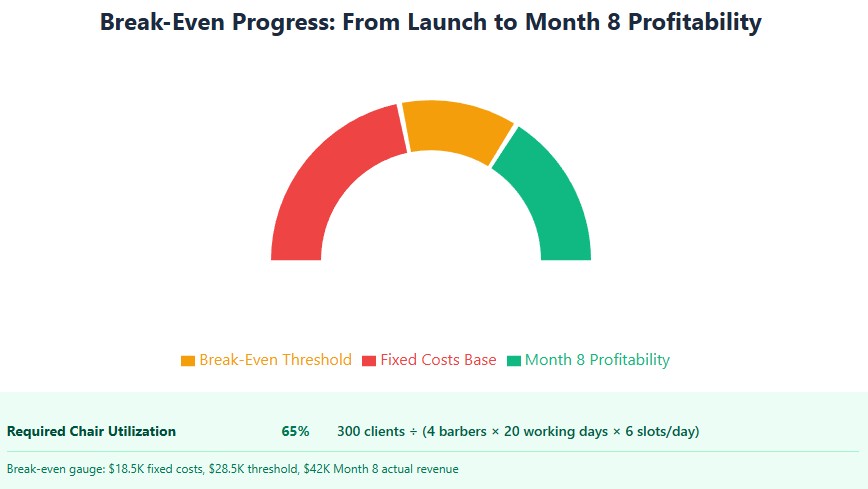
Break-Even: Month 8 (based on 65% chair utilization and 40% membership penetration)
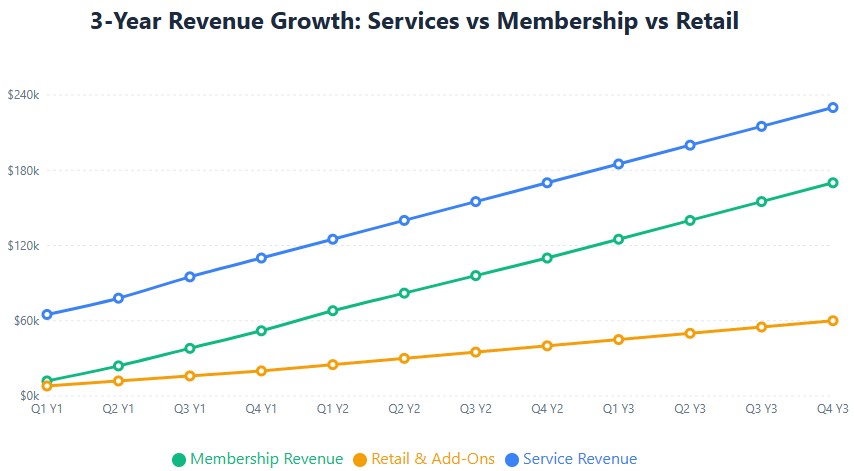
Projected Year 1 Revenue: $468,000
Projected Year 3 Revenue: $785,000
The Problem We Solve
In Chicago’s premium market, “luxury” is often mistakenly equated with vintage decor and complimentary whiskey. However, market research indicates that high-earning professionals value utility over ambiance. Their primary friction points are:
- Unpredictable timing: Traditional shops run late, disrupting tight corporate schedules.
- Seasonal degradation: Chicago’s extreme weather (winter dryness, summer humidity/pollution) damages hair and skin, requiring specialized care most shops ignore.
- Transactional relationships: Lack of continuity and personalized product regimens.
Our Solution
- Strict 45-minute service windows: Haircut, beard trim, and hydration boost. No walk-ins, no chit-chat delays.
- Value-layered services: Context-driven add-ons (e.g., “Winter Shield” scalp treatment, “Urban Detox” cleanse) that solve specific environmental problems.
- Membership-first model: Recurring revenue anchors the business, ensuring stability during Chicago’s seasonal Q1/Q2 dips.
Market Analysis
Chicago Micro-Market Breakdown
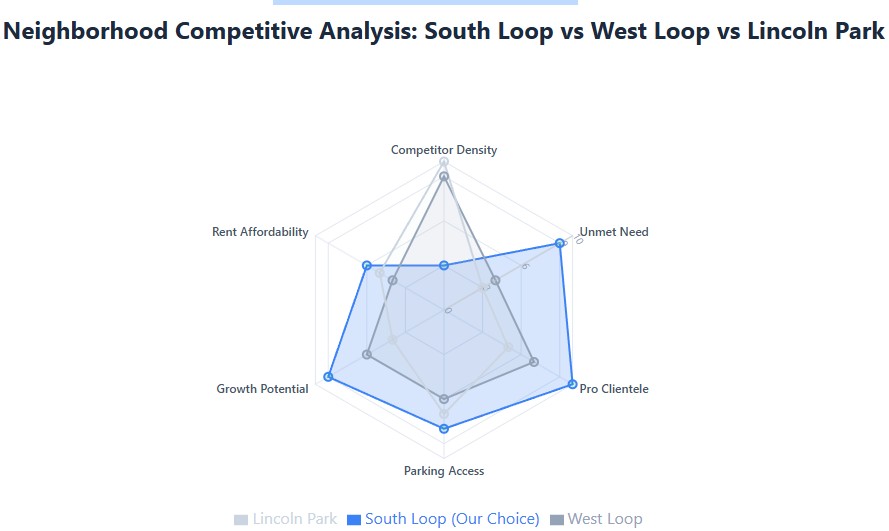
Chicago is a cluster of distinct micro-markets. Opening in the wrong zone creates immediate headwinds. Our chosen location is based on the following whitespace analysis:
| Neighborhood | Competitor Density | Unmet Need | Our Positioning Strategy |
|---|---|---|---|
| South Loop / Lakeshore East | Low | Efficient, discreet service for time-starved professionals | “The Executive Terminal”—predictable timing, digital check-in, zero friction |
| West Loop / Fulton Market | High | Experiential grooming tied to lifestyle and networking | “The Grooming Lab”—product education, social events (Not our target) |
| Lincoln Park / Old Town | Very High | Family-inclusive services and wellness-focused grooming | “Modern Gentleman’s Club”—father-and-son cuts (Not our target) |
Target Client Personas
- The Corporate Executive: Age 35–55, household income $200K+. Books via app, values a 45-minute guaranteed window, purchases premium retail for maintenance.
- The Tech/Finance Professional: Age 28–40, household income $150K+. Seeks a consistent, high-quality cut without the “traditional barbershop” noise. Highly responsive to membership perks.
Services & Pricing Strategy
Value Layering Model
Hourly rates commoditize the service. We price based on outcomes and problem-solving.
| Service Tier | Price | Duration | Includes | Target Margin |
|---|---|---|---|---|
| The Terminal Cut | $65 | 30 min | Precision cut, hot towel, style | 65% |
| The Executive Reset | $95 | 45 min | Cut, beard sculpt, hot towel, hydration boost | 70% |
| Seasonal Add-Ons | $20–$35 | 10–15 min | Winter Shield (scalp), Urban Detox (cleanse), Shoulder Release | 85% |
| Straight Razor Shave | $55 | 30 min | Traditional shave with commercial autoclave sanitation | 60% |
The Membership Flywheel
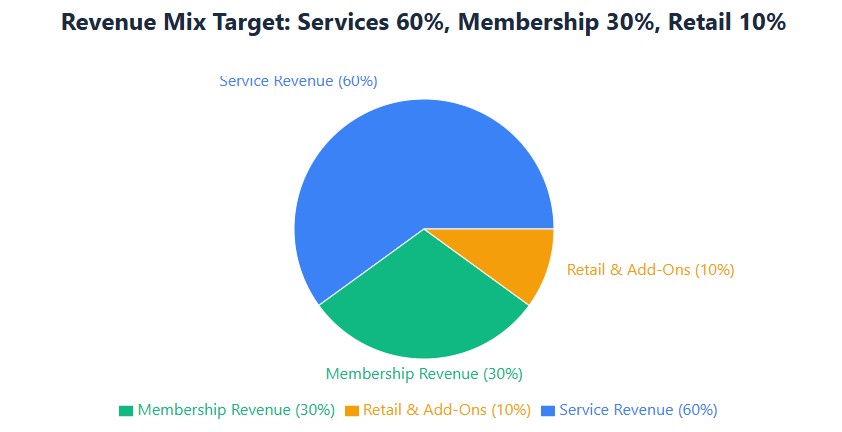
Memberships are not just discounts; they are habit-formation tools that stabilize cash flow during Chicago’s harsh winter months (Jan–Feb), when walk-in traffic typically drops 15–20%.
- Tier 1: The Standard ($95/mo) – One Executive Reset + priority booking. (Goal: Habit formation)
- Tier 2: The Partner ($195/mo) – Two services + $25 retail credit. (Goal: Increase wallet share)
- Tier 3: The Founder’s Circle ($350/mo) – Unlimited trims, quarterly treatments, guest passes. (Goal: Brand advocacy)
Benchmark: Successful shops in this model see membership client Lifetime Value (LTV) 3–4x higher than walk-ins, with annual churn under 15%.
Startup Costs & Funding
The Real Chicago Premium: Line-Item Breakdown
National guides suggesting $50K–$100K for a barbershop are dangerously misleading for Chicago. Historic building codes, union labor requirements, and extreme climate demands inflate costs significantly.
| Category | Item | Cost | Chicago-Specific Note |
|---|---|---|---|
| Lease & Deposits | Security + First/Last Month (1,200 sq ft) | $24,000 | Based on $60/sq ft NNN in South Loop |
| Leasehold Improvements Deposit | $5,000 | Standard commercial requirement | |
| Build-Out & Permits | General Contractor (Union Labor Premium) | $140,000 | 20–40% higher in Loop/South Loop districts |
| Chicago-Proof HVAC & Dehumidification | $35,000 | Essential for extreme seasons + steam/shampoo load | |
| Plumbing Retrofits (4 stations) | $32,000 | Historic building code compliance | |
| Regulatory Expediters & Permits | $6,000 | Avoids 6–12 week CDPH/Landmarks delays | |
| Equipment & Furniture | Premium Barber Chairs (4) & Stations | $18,000 | Includes structural floor anchoring |
| Commercial Autoclave & Sanitation | $3,500 | CDPH mandatory for straight razor/steam services | |
| POS, Booking Software, Retail Displays | $8,000 | Touchless payment, integrated CRM | |
| Initial Inventory | Professional Backbar & Retail Products | $12,000 | Premium, clean-ingredient brands |
| Disposables, Linens, Sanitation Supplies | $3,500 | High-turnover hygiene items | |
| Working Capital | Payroll & Operating Buffer (3 months) | $75,000 | Covers rent, base payroll before membership maturity |
| Launch Marketing (Digital + Local Partnerships) | $8,000 | Targeted LinkedIn/Meta, SpotHero integrations | |
| Contingency Fund (10%) | $35,000 | For unforeseen code upgrades or supply chain delays | |
| TOTAL STARTUP COST | $385,000 | ||
Funding Sources
| Source | Amount | Type | Use of Funds |
|---|---|---|---|
| SBA 7(a) Loan | $150,000 | Debt (10-yr term) | Build-out, HVAC, Equipment |
| Owner Equity | $235,000 | Equity | Lease deposits, Working capital, Inventory, Contingency |
| TOTAL FUNDING | $385,000 | ||
Financial Projections
3-Year Financial Summary
| Metric | Year 1 | Year 2 | Year 3 |
|---|---|---|---|
| Total Revenue | $468,000 | $612,000 | $785,000 |
| Cost of Goods Sold (COGS) | $163,800 (35%) | $201,960 (33%) | $251,200 (32%) |
| Gross Profit | $304,200 | $410,040 | $533,800 |
| Operating Expenses | $245,000 | $285,000 | $330,000 |
| Net Income (Before Tax) | $59,200 | $125,040 | $203,800 |
| Net Profit Margin | 12.6% | 20.4% | 26.0% |
Note: COGS includes barber commissions (45-50%), retail product wholesale costs, and disposables. Operating Expenses include rent, base management salary, utilities, marketing, and loan service.
Break-Even Analysis
| Metric | Value | Calculation |
|---|---|---|
| Fixed Monthly Costs | $18,500 | Rent, base salaries, utilities, software, loan payment |
| Average Contribution Margin | 65% | 100% – 35% Variable Costs (commissions, retail COGS) |
| Monthly Break-Even Revenue | $28,461 | Fixed Costs ÷ Contribution Margin ($18,500 ÷ 0.65) |
| Required Monthly Clients | 300 | Break-Even Revenue ÷ Avg Ticket ($95) |
| Required Chair Utilization | 65% | 300 clients ÷ (4 barbers × 20 working days × 6 slots/day) |
Operations & Regulatory Plan
The Regulatory Maze: Chicago-Specific Compliance
Licensing isn’t a one-step process. It’s a multi-agency puzzle. Most barbershops assume the Illinois barber license is enough. In Chicago, your service menu and location trigger additional layers.
| Agency | Trigger | Key Requirement | Hidden Cost |
|---|---|---|---|
| CDPH (Chicago Dept. of Public Health) |
Steam towels or straight-razor shaves | Specialized sanitation inspection | Commercial autoclave ($2,500–$4,000) + strict logkeeping |
| Landmarks Commission | Historic district location (e.g., parts of South Loop) | Certificate of Appropriateness for exterior/signage | Expediter fees ($3,000–$8,000) + 2-3 month timeline |
| BACP (Business Affairs & Consumer Protection) |
Retailing premium products >$50/unit | Staff certification on ingredient handling | $150/employee/year + ongoing compliance training |
Talent Retention Strategy
In Chicago, your barbers aren’t independent contractors; they are the product. Losing one with a loyal client base can cost $100,000+ in annual revenue. Top talent expects more than a standard commission split.
- Base + Commission Hybrid: $20/hour guarantee + 45% service commission + 15% retail commission. Provides stability during client-building phases.
- Membership Micro-Bonuses: $50–$200 bonus each time a barber signs up a new monthly member. This turns staff into growth partners and aligns incentives with long-term revenue.
- Continuing Education: Annual $1,000 stipend for advanced cutting or beard-sculpting certifications.
Frictionless Client Journey
Chicago clients face unique friction: parking, weather, and building access. We smooth these out to elevate the experience:
- Integrated SpotHero API for discounted, validated parking.
- Automated pre-visit SMS with specific building entrance details and weather-appropriate attire reminders.
- Flexible, no-penalty rescheduling for severe snow days.
- Touchless, discreet payment collection at the chair (no front-desk lines).
Risk Assessment & Mitigation
| Risk | Likelihood | Impact | Mitigation Strategy |
|---|---|---|---|
| Key barber departs with client book | Medium | High | CRM owns the client data, not the barber. Non-solicit agreements. Cross-training among staff. |
| Permit delays extend build-out | High | Medium | $35K contingency fund. Hire specialized regulatory expediters. Phased interior build-out. |
| Seasonal Q1/Q2 revenue dip | High | Medium | Maintain Luxury Resilience Ratio (LRR) > 0.5 via aggressive membership drives in Q4. |
| CDPH sanitation violation | Low | High | Digital, timestamped autoclave logs. Mandatory monthly staff sanitation refreshers. |
Key Performance Indicators (KPIs)
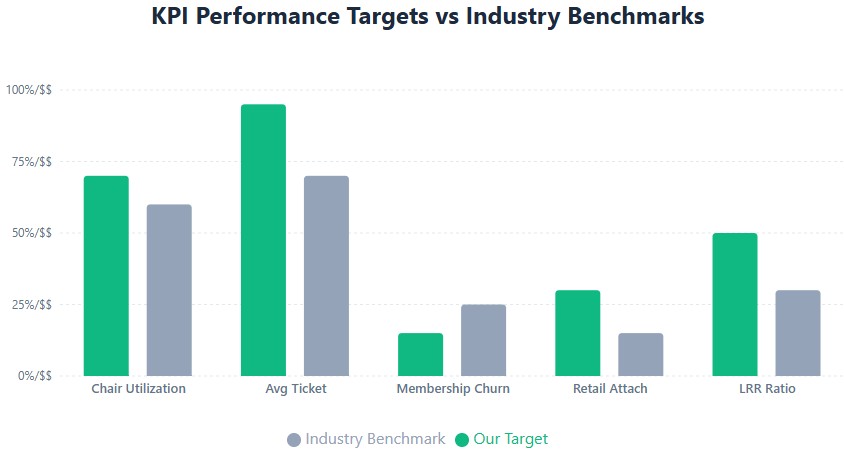
Track these metrics weekly to ensure the business stays on track:
| KPI | Target | Industry Benchmark | Calculation |
|---|---|---|---|
| Luxury Resilience Ratio (LRR) | ≥ 0.50 | N/A (Proprietary) | (Membership Rev + High-Margin Retail) ÷ Total Revenue |
| Chair Utilization Rate | ≥ 70% | 55–65% | Actual appointments ÷ Available slots |
| Average Ticket Size | ≥ $95 | $60–$75 | Total revenue ÷ Total appointments |
| Membership Churn Rate | ≤ 15% annually | 25–30% | Canceled memberships ÷ Total active memberships |
| Retail Attach Rate | ≥ 30% | 10–15% | Clients purchasing retail ÷ Total clients |
Implementation Timeline: First 90 Days
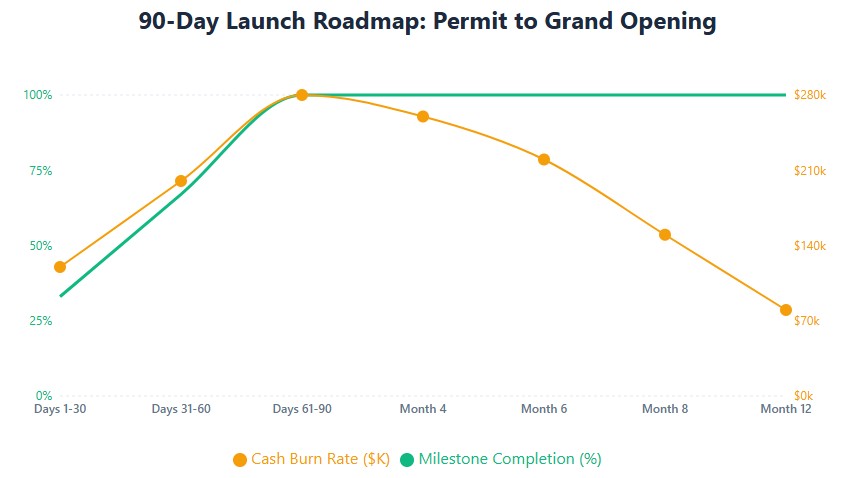
- Days 1–30: Finalize lease, submit CDPH/Landmarks applications, hire GC, order long-lead equipment (HVAC, chairs).
- Days 31–60: Begin build-out, interview and hire lead barbers, set up booking software and CRM, finalize retail vendor contracts.
- Days 61–90: Complete build-out, pass CDPH inspection, conduct 2-week “friends and family” soft launch to test workflows, refine pricing based on feedback, execute grand opening marketing push.
Next Steps
- Validate local numbers: Replace the South Loop estimates with actual quotes from your target neighborhood’s GCs and landlords.
- Consult a Chicago-specific CPA: Review the S-Corp election timeline and ensure payroll tax withholding aligns with Illinois and Chicago requirements.
- Engage a regulatory expediter: Before signing a lease, have them verify the zoning and landmark status of the specific address to avoid catastrophic delays.
- Stress-test the LRR: Model your financials assuming a 20% drop in walk-in traffic. If the business remains cash-flow positive due to memberships, your model is resilient.
Final Reality Check
If you’re serious about launching a high-end barbershop in Chicago, start with this checklist:
- Secure 1.5x to 2x more capital than national averages suggest.
- Map regulatory triggers (CDPH, Landmarks) before signing a lease.
- Design your service menu around seasonal and neighborhood needs, not just aesthetics.
- Build your financial model around recurring membership revenue, not unpredictable walk-ins.
The city rewards operators who plan like locals. Get that right, and you’re not just opening a barbershop—you’re building a fixture.