A micro bakery is a small-scale, home-based or compact commercial operation focused on artisan breads, pastries, or specialty goods. Unlike traditional bakeries with storefronts and wholesale contracts, it runs lean—often from a compliant home kitchen—with direct-to-consumer sales as the core strategy.
In 2026, the model is more viable than ever, but the “Instagram dream” of passive six-figure income is dead. The reality is a disciplined, labor-intensive business that offers steady side income or a modest full-time wage—if you treat it like a real company from day one. With rising ingredient costs (flour up 15–20% since 2023, according to BLS retail food price data) and higher energy bills, you can’t compete on price. You must compete on quality and convenience. This guide cuts through the hype to show you the legal constraints, the real unit economics, and the three specific models that actually work in today’s market.
Is a micro bakery actually viable in 2026? (The Real Numbers)
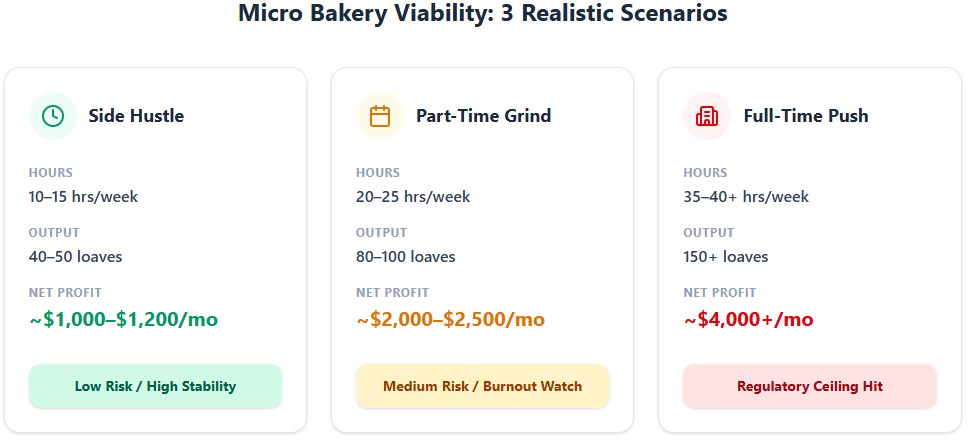
Viability isn’t a yes/no question; it’s a math problem based on your time, local laws, and pricing power. In 2026, rising ingredient costs and higher energy bills mean you can’t compete on price. You must compete on quality and convenience. Here are the three realistic scenarios for a solo operator:
Scenario 1: The Side Hustle (10–15 hours/week)
Output: 40–50 loaves/week (one bake day).
Channel: Pre-order pickup + 1 farmers’ market.
Revenue: ~$2,000/month.
Net Profit (before labor): ~$1,000–$1,200.
Verdict: Highly viable. Low risk, covers groceries/utilities, builds brand slowly. Most beginners start here.
Scenario 2: The Part-Time Grind (20–25 hours/week)
Output: 80–100 loaves/week (two bake days).
Channel: Subscription club (30 households) + 2 markets.
Revenue: ~$4,000–$5,000/month.
Net Profit (before labor): ~$2,000–$2,500.
Verdict: Viable if you have efficient systems. Burnout risk is high if you don’t automate ordering and packaging.
Scenario 3: The Full-Time Push (35–40+ hours/week)
Output: 150+ loaves/week (3–4 bake days).
Channel: Mixed: Subscriptions, local cafe wholesale, markets.
Revenue: $8,000+/month.
Net Profit (before labor): ~$4,000+.
Verdict: Danger zone for home kitchens. You will likely hit your state’s Cottage Food Law sales cap within 6–9 months. Viability requires a plan to move into a commercial commissary kitchen immediately.
The 2026 Shift: Pure market-dependent models are declining due to vendor fatigue and weather unpredictability. The most viable bakeries in 2026 use pre-order subscriptions to lock in cash flow before they even turn on the oven. If you’re baking without guaranteed buyers, you’re gambling, not business-building.
How It Actually Works (Beyond the Hype)
The appeal is clear: low startup costs (under $2k for basic equipment), strong margins on premium goods, and growing demand for local, transparent food. But viability depends on understanding the real constraints—not just the aesthetic.
Key Features of a True Micro Bakery
- Small Footprint: Production happens in a home kitchen (under Cottage Food Laws) or under 500 sq ft of commercial space. No storefront, no dine-in.
- Direct Sales Only: No wholesale middlemen taking 40%. Sales go through pre-orders, porch pickups, farmers’ markets, or local delivery.
- Niche Focus: Success comes from specializing—sourdough, gluten-free, heritage grains, or vegan. Trying to be everything to everyone kills efficiency.
Legal Reality: Cottage Food Laws Are Your Foundation (And Your Ceiling)
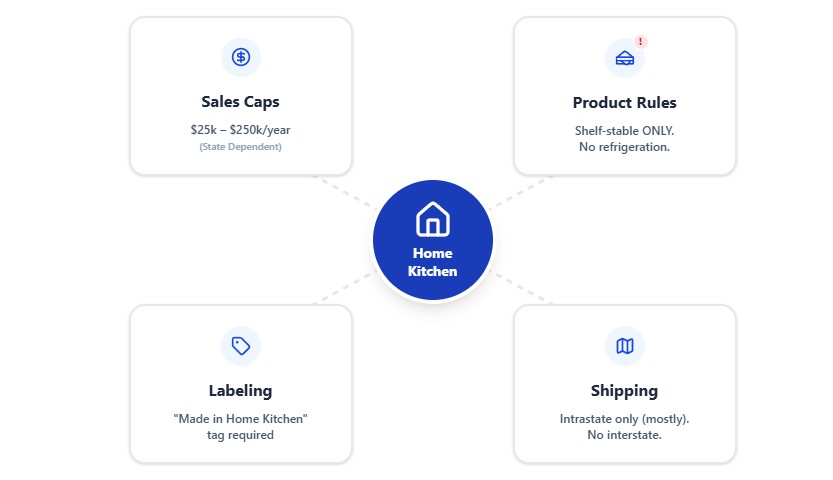
You can’t skip this step. Cottage Food Laws vary by state and allow home-based production of “non-hazardous” baked goods—like breads, cookies, and dry cakes. But they come with hard limits that define your viability.
- Sales Caps: Range from $25,000 (strict states) to over $250,000 (lenient states) annually. Furthermore, some states (e.g., Illinois, Wyoming, North Dakota) have removed caps entirely under expanded “food freedom” laws. Know your number. If you hit it, you must stop or move to a commercial kitchen. You can track your specific state’s limits via resources like Cottage Food Law state directories.
- Product Rules: Generally, no refrigerated items. No cream-filled pastries, custards, or fresh cheese unless you have a commercial license. Stick to shelf-stable goods.
- Labeling: Required tags like “Made in a Home Kitchen” are non-negotiable. Missing this can shut you down instantly.
- Shipping Restrictions: Most states prohibit interstate shipping of cottage foods. Some now allow intrastate shipping (e.g., Minnesota, Texas), but check your specific food board rules.
Top 3 Legal Mistakes New Bakers Make:
- Assuming all states are the same: California’s rules differ wildly from Ohio’s. Research your state’s Department of Agriculture website directly—don’t rely on third-party blogs.
- Selling “gray area” items: Thinking your cream cheese frosting is “safe” because it’s mostly sugar. If it requires refrigeration, it’s likely illegal under cottage laws.
- Ignoring sales tax: Just because you’re small doesn’t mean you’re exempt. Register for an EIN and collect sales tax if your state requires it.
For accurate, up-to-date guidance on home bakery laws by state, visit the National Agricultural Law Center’s state-by-state cottage food directory and verify directly with your state’s Department of Agriculture.
Real-World Cost Breakdown & Unit Economics
Typical ranges reported by home bakers and professional resources like King Arthur Baking Professional show that successful micro bakers keep ingredient costs (COGS) at 25–35% of retail price. In 2026, with flour and energy costs up, aiming for 30% is safe. You’re not competing with grocery store prices—you’re selling craftsmanship and convenience. For a deeper dive into commercial vs. home bakery economics, read our full breakdown of bakery profit margins in the USA.
Want to test your own numbers? Plug your ingredient costs and retail price into our Profit Margin Calculator to see if your loaf is actually profitable.
| Item | Estimated Cost (2026) | Notes |
|---|---|---|
| 50lb Bag, Standard Bread Flour | $25 – $35 | Prices stabilized but remain above 2023 levels. |
| 50lb Bag, Organic Heritage Flour | $80 – $160+ | High variance based on supplier and region. |
| Weekly Farmers’ Market Booth Fee | $40 – $250 | Urban markets charge premium; rural are cheaper. |
| Eco-Friendly Branded Packaging (per unit) | $0.30 – $1.75 | Paper bags + stickers + labels. Don’t skimp here; it’s your marketing. |
| Labor (Your Time) | $0 (initially) | Track this separately. If you pay yourself $20/hr, does the model still work? |
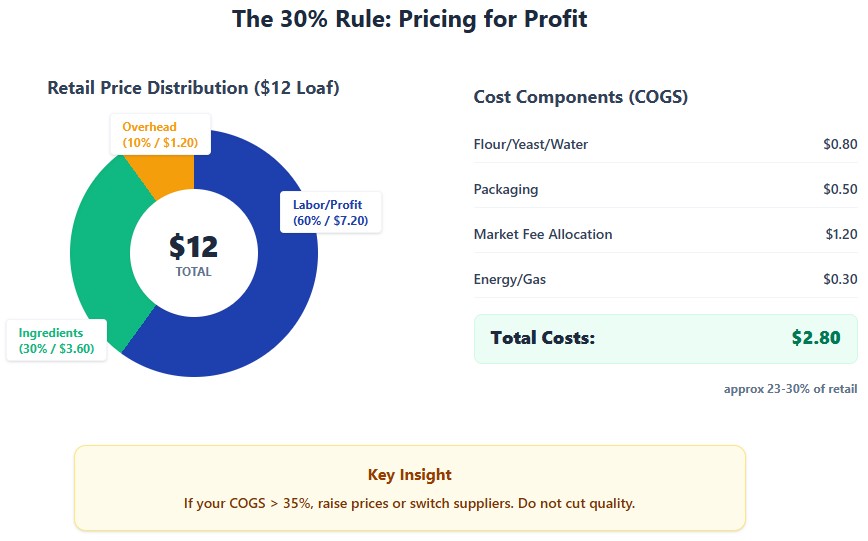
The Pricing Rule: A loaf costing $3.50 in ingredients and packaging should sell for $10–$12. If you can’t sell it for that, your niche isn’t strong enough or your location won’t support it.
3 Models That Actually Work in 2026
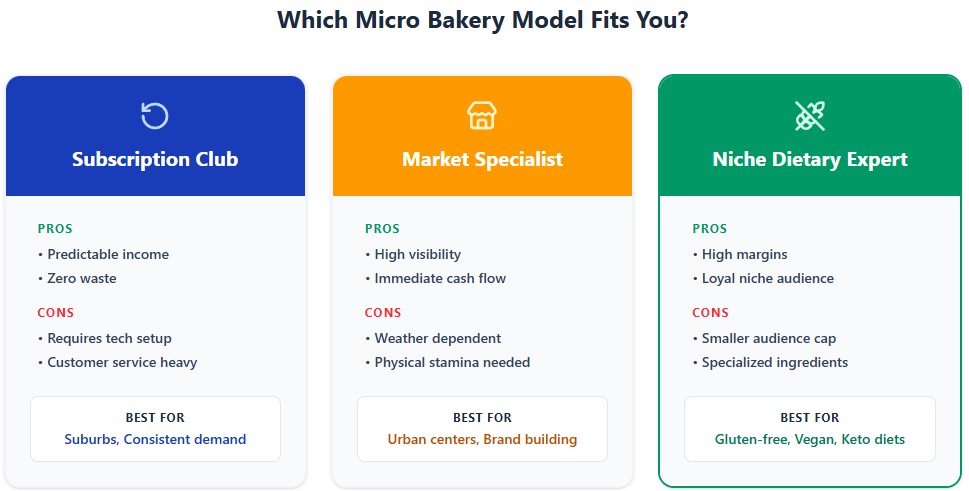
Not all micro bakeries are built the same. Choose one primary model to start. Mixing them too early leads to operational chaos.
- 1. The Subscription Club (Highest Viability): Weekly or bi-weekly bread shares with fixed menus. Customers pay upfront. Reduces waste to near zero, locks in cash flow, and builds loyalty. Best for: Suburban areas with consistent demand. Requires a simple website or form builder.
- 2. The Market Specialist (Highest Visibility): High-energy weekend sales at farmers’ markets. Requires stamina, batch efficiency, and great display. Builds brand fast but weather-dependent. Best for: Urban centers with foot traffic. Use this to drive subscribers to your online list.
- 3. The Niche Dietary Expert (Highest Margins): Gluten-free, keto, or vegan-only offerings. Commands premium pricing ($15–$18/loaf). Case studies show higher retention when dietary trust is established. Best for: Bakers with specific expertise. Less competition, smaller but loyal customer base.
Mini-Cases: Real Baker Profiles
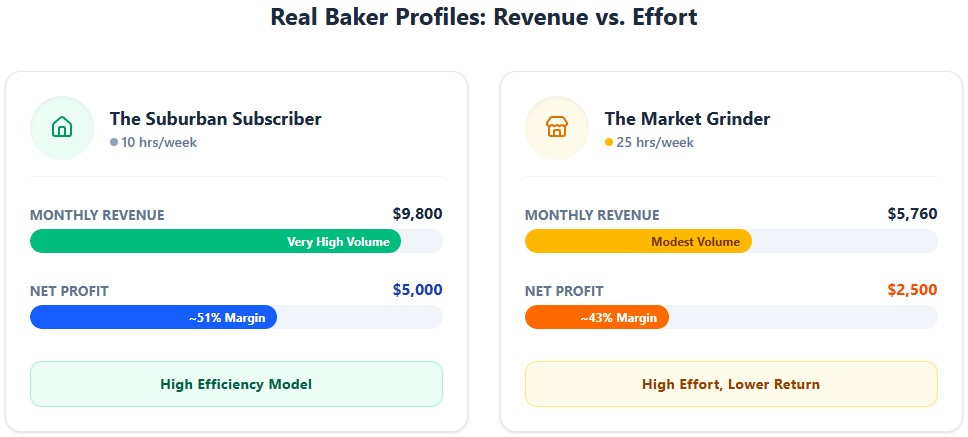
To ground these numbers, here are two operator profiles based on common 2025–2026 models and community data:
Baker A: The Suburban Subscriber
Location: Mid-sized suburb.
Model: 35-household subscription club. 2 SKUs (Sourdough + Focaccia).
Workload: 1 bake day (Friday), 1 pickup day (Saturday). 10 hours/week total.
Revenue: 35 households buying a 2-loaf weekly share at $12/loaf ($24/week). $24 x 35 households x 4.3 weeks = ~$3,612/month gross.
Profit: ~$2,500/month before labor (assuming ~30% COGS). Viability: High. Scalable until state cap is hit.
Real Operator Profile: “Elena” (based on r/smallbusiness and r/Baking community case studies)
Location: Urban city in Ohio.
Model: 2 farmers’ markets/weekend + direct local porch drop-offs.
Workload: 2 bake days (Thu/Fri), 2 market days (Sat/Sun). 25 hours/week.
Revenue: Sells out of 60 loaves/weekend at $12 each. 60 loaves x $12 x 4.3 weekends = ~$3,096/month gross.
Profit: ~$2,100/month before labor. Viability: Medium. High burnout risk and heavily weather dependent, but a common reality for market-first bakers trying to build a subscriber list.
Biggest Challenges (And How Smart Bakers Handle Them)
- Time Crunch & Burnout: You’re the baker, marketer, accountant, and driver. Top performers batch admin work weekly and use simple tools like Google Forms or Shopify Lite to track orders. Never bake without a pre-order or guaranteed market slot.
- The Regulatory Ceiling: Once you hit your state’s sales cap, you must move to a commercial kitchen. Plan for this early. It’s not a failure; it’s progress. Start building relationships with commissary kitchens before you hit the limit.
- Standing Out in a Crowded Market: In 2026, “artisan sourdough” is everywhere. The best bakers lean into a clear story: “We bake with 100-year-old starters” or “All our flour is milled within 50 miles.” Or, solve a problem: “Gluten-free that actually tastes good.”
How to Start Right in 2026 (Step-by-Step)
- Start with the law: Check your state’s Cottage Food regulations. Look up the “non-potentially hazardous foods” list. Your products must fit here. Call your local health department if unsure.
- Test small (The “Friends & Family” Phase): Bake for friends, run a tiny pop-up, or sell at one market. Gauge demand before investing in custom packaging or a website. Get feedback on taste and price tolerance.
- Price for profit: Use the 30% ingredient rule. If your cost goes higher, raise your price—don’t cut quality. Customers paying for artisan goods expect premium pricing.
- Build systems first: Even a Google Form for orders beats chaos. Track every sale and expense from Day 1. Use a separate bank account for the business.
- Register your business: Get an EIN, open a separate bank account, and understand the full legal and physical requirements to start a bakery in your city, including local sales tax rules. Legitimacy builds trust with customers.
Final Verdict: Is It Worth It?
A micro bakery in 2026 is viable if you want a flexible, creative, and physically demanding business that can generate $1,000–$5,000/month in profit from home. It is not viable if you’re looking for passive income or quick scaling. Success comes from treating it like a real business: respecting the legal caps, pricing for profit, and building a loyal subscriber base that buys before you bake.
Disclaimer: This article is for informational purposes only and does not constitute legal or financial advice. Cottage Food Laws change frequently and vary by state and county. Always consult your local Department of Agriculture or health department for the most current regulations.